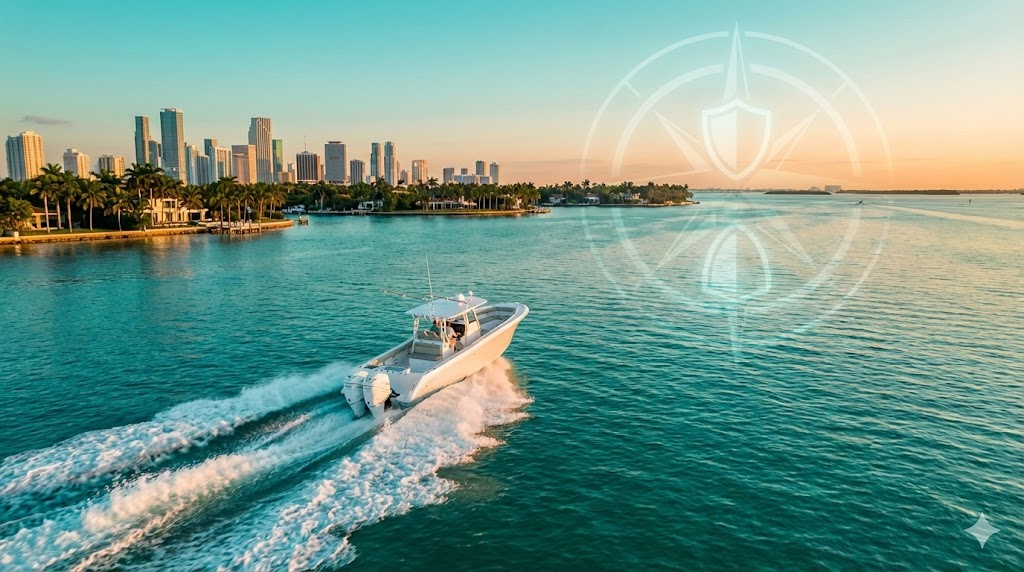
It’s only 50 miles from Miami to Bimini, but crossing that stream changes everything regarding your insurance coverage.
Before you load up the center console for a weekend in the Exumas, you need to check your "Navigation Limits." Most standard boat policies sold in Florida restrict you to U.S. coastal waters (often defined as 125 miles offshore, but strictly U.S. territory).
Key takeaways:
- Crossing into the Bahamas may require an endorsement—don’t assume you’re covered.
- Bring proof of insurance/coverage and follow customs rules for a smooth trip.
- High-limit towing is essential for offshore breakdowns.
1. Do you need a Bahamas endorsement to cross?
Crossing international lines without permission voids your policy. If you hit a reef or get stolen in Nassau without the endorsement, your claim will be denied.
Contact us to add a Bahamas Endorsement. Some carriers include it automatically for boats over a certain size, while others require you to call in for specific trip dates. It usually costs a small additional premium.
2. What documents and customs steps should you plan for?
Remember, insurance covers accidents, not government fines. Make sure you adhere to maritime law:
- Fly the yellow "Q" flag upon entering Bahamian waters until you clear customs.
- Declare all firearms and spearfishing gear (strictly regulated).
- Have your original registration and insurance "Binder" (proof of coverage) on board. Marinas in Chubb Cay or Atlantis will ask for it.
3. How much towing coverage do you need offshore?
Breaking down in Biscayne Bay is an inconvenience. Breaking down 30 miles offshore in the Gulf Stream is an emergency.
WYN Tip:
Standard towing limits ($500) won't cover an offshore tow back to Miami, which can cost $3,000+. Ensure your policy has Commercial Towing or a high-limit endorsement.