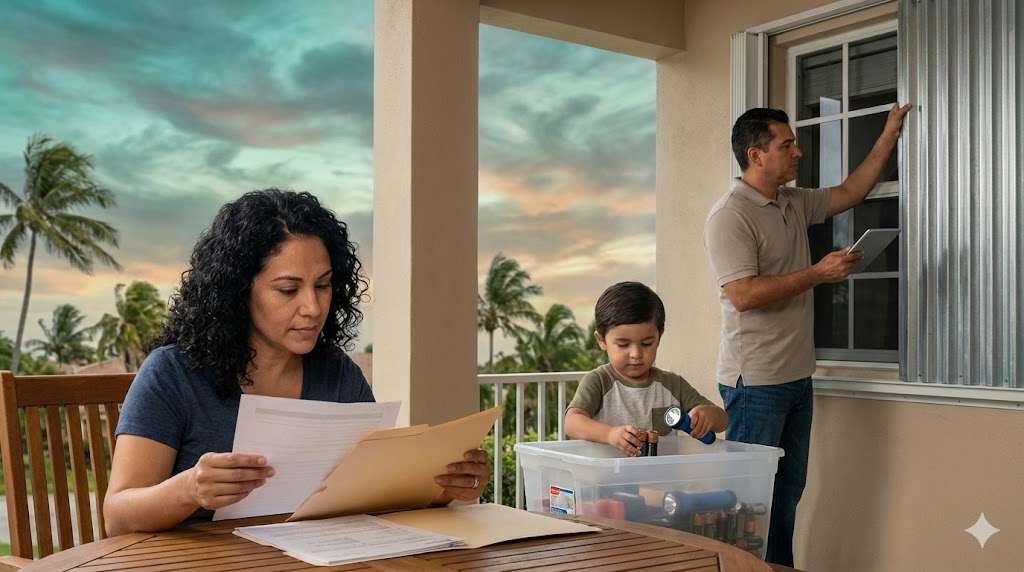
June 1st officially marks the start of hurricane season in Florida. While you're stocking up on water and batteries, don't forget the most critical prep of all: securing your insurance.
Waiting until a storm is named is too late. Insurers often issue "moratoriums," preventing any changes to policies once a hurricane is threatening Florida. Here's your winning strategy to protect your home and assets:
Key takeaways:
- Know your hurricane deductible amount before a storm is named.
- Homeowners doesn’t cover flooding—plan ahead for the waiting period.
- Document valuables and understand ALE before you need it.
1. What is your hurricane deductible?
Unlike your standard A-to-Z deductible, hurricane deductibles are typically a percentage (2%, 5%, or 10%) of your home's insured value. For a $500,000 home with a 2% deductible, that's $10,000 out of pocket *before* your insurance kicks in.
- Action: Know your percentage and the dollar amount it represents. Have these funds readily accessible in your emergency savings.
2. Does homeowners insurance cover flooding?
This is critical: **Homeowners insurance does NOT cover flood damage.** Period. Flood insurance is a separate policy, often through the National Flood Insurance Program (NFIP) or a private carrier.
- Action: If you're in a flood zone (and many parts of Miami are!), get a separate flood policy. If you don't have one now, there's a **30-day waiting period** before it becomes effective. Don't wait!
3. Do you have extended replacement cost coverage?
After a major hurricane, construction costs can skyrocket due to demand. Does your policy have "Extended Replacement Cost"? This adds an extra percentage (e.g., 20-25%) beyond your dwelling coverage limit, helping cover unexpected surges in rebuilding costs.
- Action: Confirm with us that your policy includes this essential buffer.
4. Have you documented your valuables (photo/video)?
When the chaos settles, proving what you lost can be daunting. Walk through your home with your phone, recording a video and narrating significant items. Open closets, show furniture, electronics, and any high-value possessions.
- Action: Store this video/photos off-site (cloud storage, external hard drive with a friend/family).
5. What does your policy cover for Additional Living Expenses (ALE)?
If your home is uninhabitable after a storm, your policy should cover "Additional Living Expenses" (ALE). This pays for hotel stays, temporary rentals, food, and other costs incurred while your home is being repaired.
- Action: Understand your ALE limits (often a percentage of your dwelling coverage or a specific dollar amount for a duration).
6. Are your auto and boat policies set up for storm damage?
Don't forget your vehicles! Comprehensive coverage on your auto policy will cover storm damage like falling trees or floodwater. For boats, marine policies have their own considerations:
- Action: Ensure your auto has comprehensive. For boats, verify your "Named Storm Deductible" and "Reasonable Efforts" clause for securing your vessel.
WYN Tip:
Many marine policies require you to take "reasonable efforts" to protect your boat, such as moving it to higher ground or a storm-rated dry dock. Document these efforts with photos if a storm approaches!
7. Do you have your agent’s contact info and policy numbers handy?
After a storm, cell towers might be down, and internet spotty. Have your agent's direct number and email written down, along with your policy number. The WYN app also provides quick access to your documents and claim forms.
- Action: Save our number in your phone AND write it down somewhere accessible without power.
Hurricane season is a marathon, not a sprint. By taking these proactive insurance steps now, you'll be better prepared to weather whatever comes our way.